AI Retouching and AI Design Workflow Are Transforming Creative Agencies
AI retouching and AI design workflow systems are reshaping how creative agencies manage photo editing at scale. What once required large teams handling manual corrections, detailed masking, and repetitive refinements can now be streamlined through intelligent automation integrated into modern design environments.
For agencies managing multiple clients, tight deadlines are constant.
Campaign launches.
Social media content.
eCommerce product shoots.
Advertising creatives.
The volume never slows down.
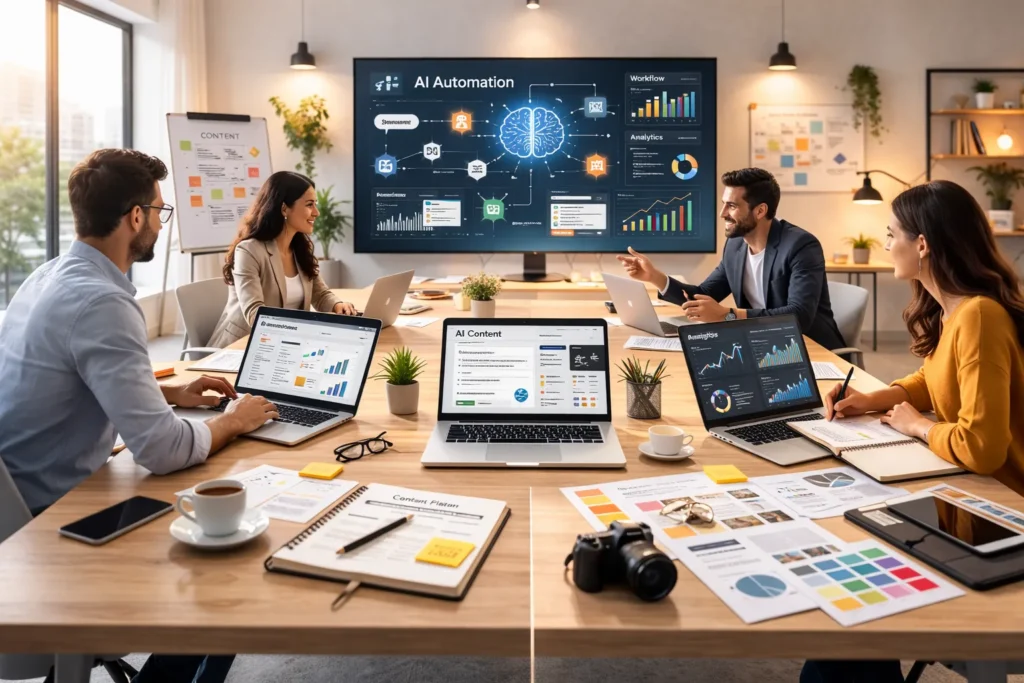
That’s where structured automation systems become essential not to replace designers, but to enhance operational efficiency.
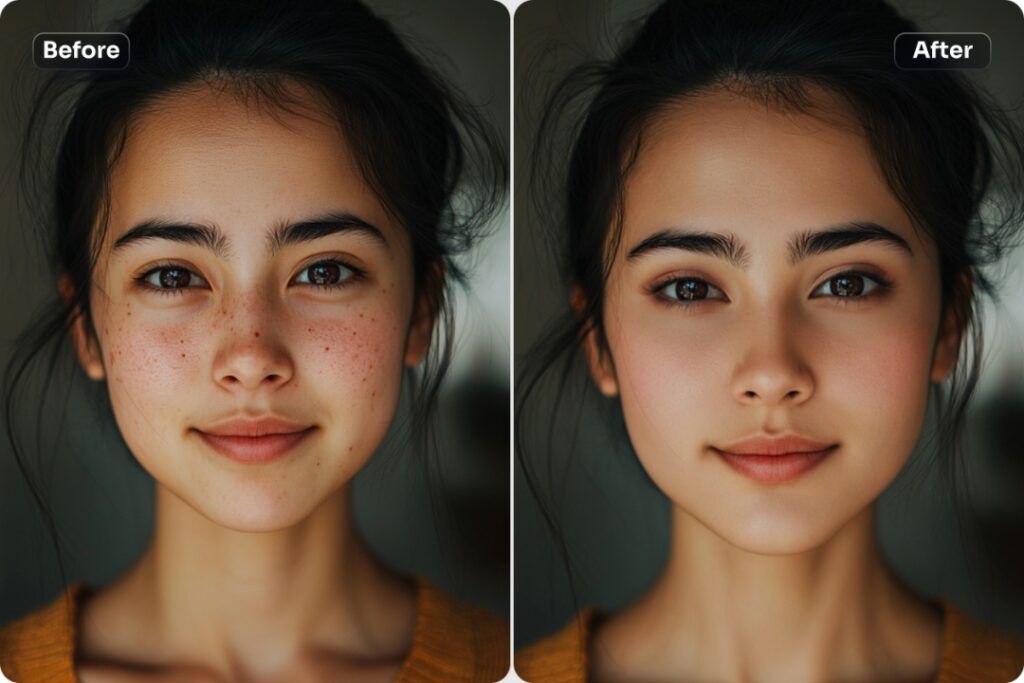
The Role of Intelligent Retouching in Agency Environments
Photo retouching has traditionally been one of the most time-consuming parts of post-production.
Skin correction.
Lighting adjustments.
Background cleanups.
Color balancing.
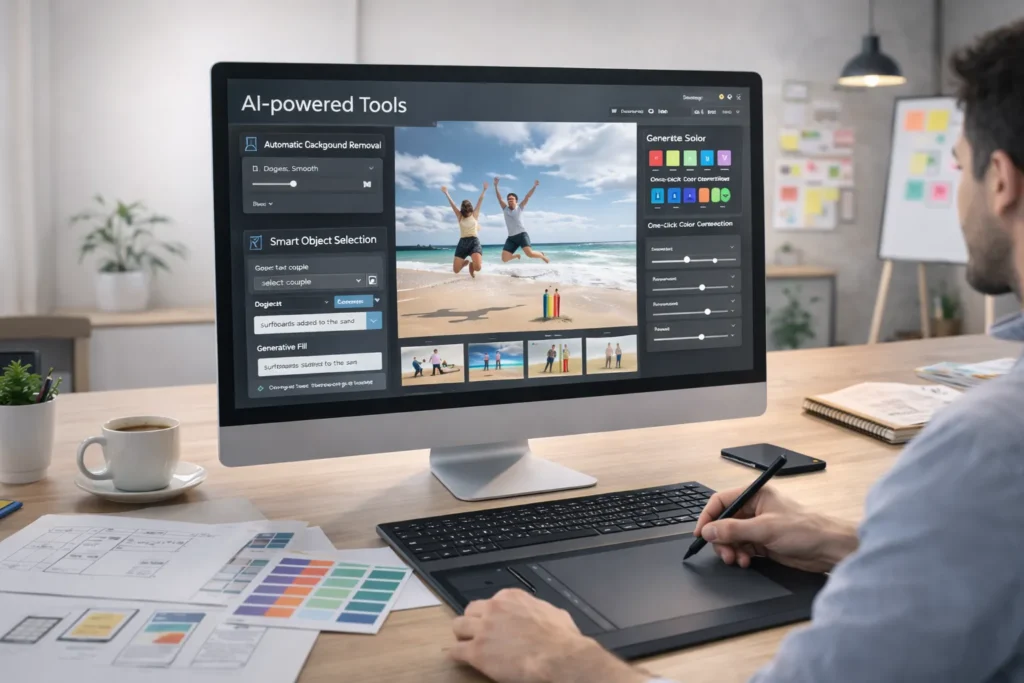
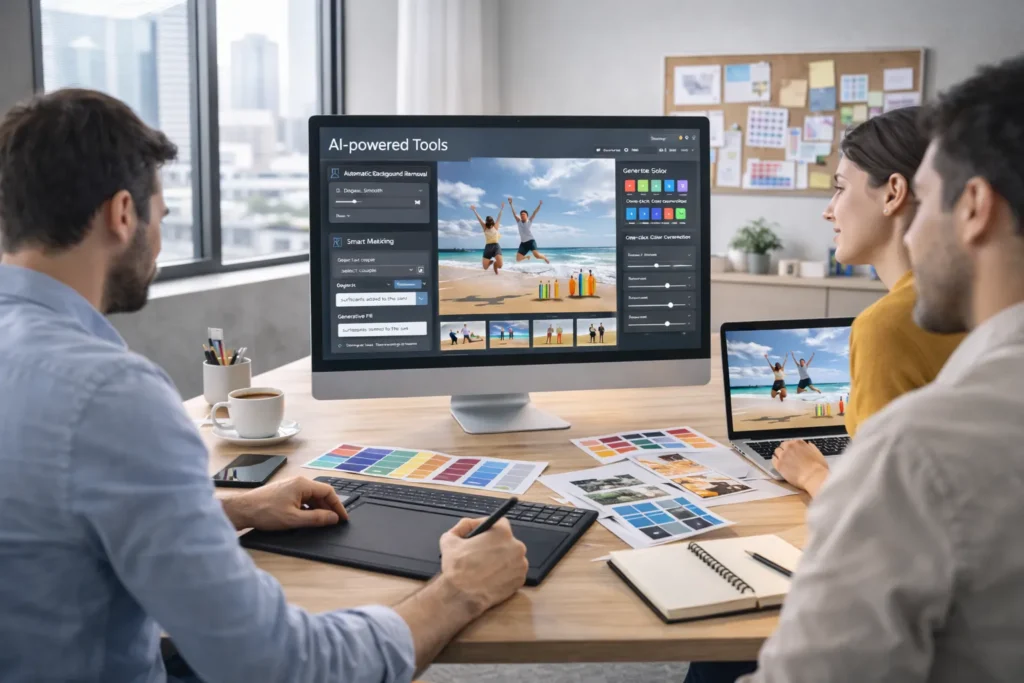
Modern AI retouching now accelerates these processes significantly.
Advanced tools allow agencies to:
- Automatically smooth skin while preserving texture
- Adjust lighting balance across image batches
- Remove unwanted elements instantly
- Standardize tones across product catalogs
Instead of manually correcting every image, teams can build controlled presets supported by automation.
This reduces editing hours without compromising brand quality.
Building an Efficient AI Design Workflow
The real advantage for agencies isn’t just speed it’s structured implementation.
An effective AI design workflow typically includes:
1. Smart Asset Organization
Images are categorized and prepared for automated processing.
2. Assisted Base Corrections
Initial enhancements are applied using intelligent retouching systems.
3. Manual Creative Refinement
Designers fine-tune hero visuals for brand alignment.
4. Batch Adaptation
Assets are resized and optimized for different platforms.
5. Quality Control
Final reviews ensure consistency before client delivery.
This hybrid model combines automation with creative oversight.
The result: faster production without sacrificing standards.
Why Agencies Are Scaling with Automation
Creative agencies operate under pressure to deliver both speed and quality.
AI-powered editing enables:
- Faster turnaround times
- Reduced production bottlenecks
- Lower revision cycles
- More consistent output
Meanwhile, structured design workflows help agencies:
- Manage higher project volumes
- Maintain editing consistency across teams
- Reduce burnout from repetitive corrections
- Improve profitability through time savings
For agencies handling eCommerce brands, fashion campaigns, or digital advertising, scaling photo production is critical. Intelligent workflow systems make that scalability realistic.
Does Automation Reduce Creative Value?
A common misconception is that automation lowers originality.
In reality, it does the opposite.
AI retouching handles technical corrections so designers can focus on:
- Creative direction
- Mood development
- Visual storytelling
- Campaign consistency
Technology supports execution.
Humans define aesthetics.
The most successful agencies treat automation as infrastructure not a creative replacement.
The Strategic Advantage in Competitive Markets
In fast-moving digital markets, production speed influences performance.
Agencies using structured editing systems gain an advantage by:
- Delivering campaigns faster
- Testing more visual variations
- Handling multiple clients efficiently
- Scaling without expanding teams
Time saved on corrections becomes time invested in strategy.
And strategy drives measurable results.
The Future of Agency-Level Editing
As AI retouching and AI design workflow systems continue evolving, agencies will move toward even more intelligent automation including predictive corrections, style matching across campaigns, and advanced batch processing.
However, one principle remains constant:
Creativity stays human.
Technology enhances execution.
The future of creative agencies lies in mastering this balance combining artistic vision with structured, intelligent systems that maximize both efficiency and output quality.
The next phase will focus on deeper integration.
Automation will connect directly with brand guidelines, adjusting tones, lighting styles, and visual moods to match predefined identities. Workflow systems will integrate with asset management platforms, approval tools, and performance dashboards — creating seamless pipelines from raw image to published campaign.
This level of integration won’t reduce creative roles.
It will elevate them.
Designers will spend less time correcting exposure and more time crafting visual narratives. Creative directors will review faster variations. Agencies will test multiple concepts before finalizing production.
Those who treat intelligent systems as strategic infrastructure not shortcuts will operate with greater speed, consistency, and confidence.
The future of agency editing isn’t about replacing talent.
It’s about empowering it.
And the agencies that master this balance will lead the next era of professional photo production.