

AI vs Human Creativity: Understanding the Real Difference
AI vs human creativity is one of the most debated topics in modern marketing and content creation. As AI tools become more advanced, brands and agencies are asking a critical question: should content be created by artificial intelligence, human writers, or a combination of both?
The answer isn’t as simple as choosing one over the other.
To truly understand AI vs human creativity, we need to break down what each brings to the table and where each falls short.
What AI Does Better Than Humans
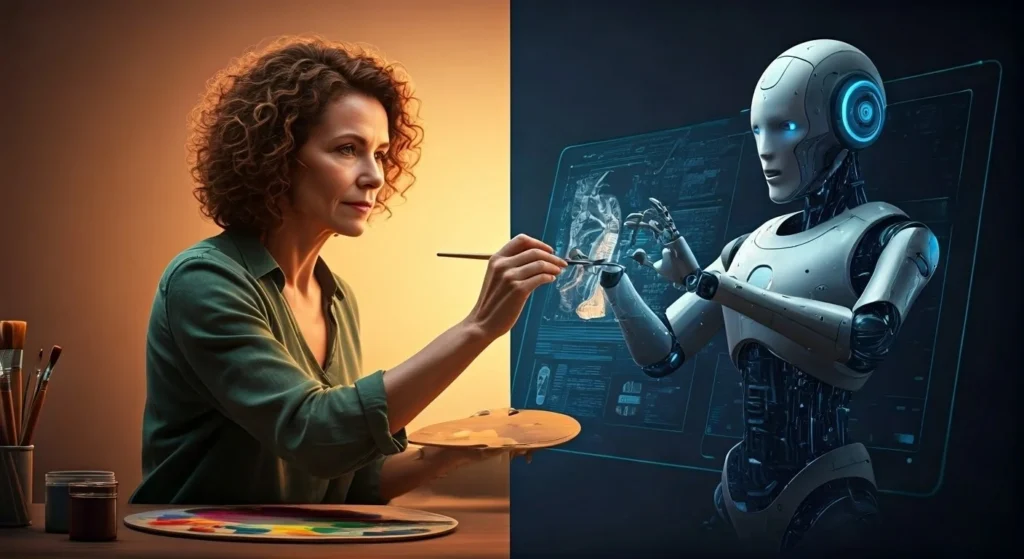
AI content tools are designed for speed, structure, and data-driven output. When comparing AI vs human creativity, automation clearly wins in execution efficiency.
Here’s where AI performs best:
1. Speed and Scale
AI can generate blog drafts, ad variations, product descriptions, and captions in minutes. What might take a writer several hours can be completed almost instantly.
For brands producing large volumes of content, this efficiency is powerful.
2. Data and SEO Alignment
AI tools analyze search intent, keyword placement, NLP terms, and content gaps quickly. In the AI vs human creativity debate, AI has an advantage when it comes to structured SEO optimization.
It ensures:
- Proper heading structure
- Keyword distribution
- Semantic coverage
- Consistency in formatting
Humans can do this too but AI does it faster.
3. Content Automation
AI thrives in repetitive tasks. Email sequences, ad copy variations, FAQs, and repurposed content can be generated systematically.
For brands focused on operational efficiency, AI reduces creative burnout.
Where Human Creativity Wins
While AI is powerful, human creativity still holds a strong advantage in areas that require emotional intelligence and original thought.
When analyzing AI vs human creativity, humans outperform in the following areas:
1. Emotional Depth
Humans understand nuance, tone shifts, cultural context, and subtle emotional triggers. Storytelling requires empathy — something AI can simulate but not truly feel.
Content that connects deeply with audiences often requires human insight.
2. Original Ideas and Innovation
AI generates based on patterns and existing data. It predicts what works based on training information.
Humans, however, create disruptive ideas. They challenge norms. They introduce perspectives that haven’t been seen before.
In pure originality, human creativity leads.
3. Brand Voice and Strategic Positioning
While AI can mimic tone, it requires guidance. Humans define brand personality, positioning, and long-term narrative.
In the AI vs human creativity discussion, strategy is still human-led.
The Real Comparison: Efficiency vs Depth
The true comparison in AI vs human creativity isn’t about replacement. It’s about strengths.
AI offers:
- Speed
- Structure
- Optimization
- Scalability
Humans offer:
- Storytelling
- Emotional connection
- Strategic insight
- Creative risk-taking
One is operationally powerful.
The other is emotionally intelligent.
What Works Best in AI Content Creation?
The most effective approach is not choosing sides.
It’s integration.
When brands combine AI efficiency with human creativity, they build smarter systems. AI can generate structured drafts and optimize for search intent, while humans refine messaging, improve storytelling, and ensure authenticity.
This hybrid model solves the AI vs human creativity debate practically.
Instead of asking which is better, forward-thinking teams ask:
“How can both work together?”
The Future of AI vs Human Creativity
As AI technology continues to improve, the line between machine-assisted and human-driven content will blur further.
But one reality remains constant:
AI enhances performance.
Humans create meaning.
Brands that rely only on automation risk sounding generic.
Brands that ignore AI risk falling behind in speed and scalability.
The future belongs to teams that understand balance.
Final Verdict
AI vs human creativity is not a battle.
It’s a collaboration.
AI content creation works best when supported by human insight. Automation improves efficiency, but human thinking drives originality.
In today’s competitive digital ecosystem, the smartest strategy isn’t choosing AI or humans.
It’s building systems where both elevate each other.
That’s what truly works best.