
AI Creative Agency and AI Marketing Are Reshaping Modern Advertising
AI creative agency and AI marketing strategies are redefining how advertising agencies operate, deliver campaigns, and scale creative output. What once required large creative teams, extended timelines, and manual optimization is now supported by intelligent systems that accelerate both ideation and execution.
Advertising has always been fast-paced.
But today, speed alone isn’t enough.
Agencies must deliver:
- High-volume content
- Multi-platform campaigns
- Personalized messaging
- Data-driven optimization
That’s where advanced automation inside modern agency structures becomes transformative.
Not by replacing creative professionals But by restructuring how agencies think, produce, and scale.
The Evolution of the Modern Agency Model
Traditional advertising agencies were built around departments:
Creative.
Media buying.
Strategy.
Production.
Each function operated in phases, often disconnected from real-time data.
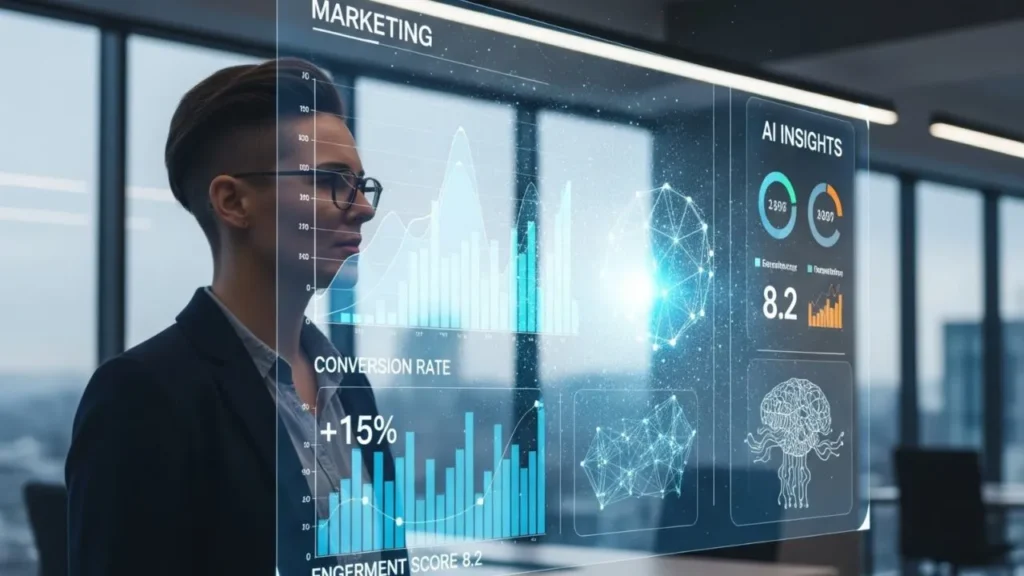
Today, intelligent marketing systems connect these functions into unified workflows. Instead of isolated teams, agencies operate through integrated platforms that combine analytics, creative generation, testing, and optimization.
A modern AI creative agency leverages intelligent tools for:
- Audience insights
- Campaign concept development
- Visual generation
- Copy refinement
- Performance forecasting
- Live experimentation
Instead of waiting weeks for reports, agencies adjust campaigns instantly.
This shortens feedback loops and improves accuracy.
How Automation Is Changing Campaign Execution
Campaign development once required long cycles of brainstorming, drafting, revising, and launching.
Now, advanced AI marketing platforms assist with:
- Automated audience segmentation
- Predictive performance analysis
- Dynamic creative variations
- Headline and messaging optimization
- Real-time A/B testing
For creative teams, this means less time spent on repetitive adjustments and more time refining brand positioning.
Data becomes proactive rather than reactive.
Campaigns evolve while live not after underperformance.
Operational Transformation Inside Agencies
The biggest change is operational efficiency.
Agencies using structured intelligent systems can:
- Launch campaigns faster
- Generate more creative variations
- Personalize messaging at scale
- Reduce manual reporting
- Track ROI with greater clarity
Instead of designing a handful of creatives manually, teams can generate dozens of variations, test them simultaneously, and scale the highest-performing assets.
This changes experimentation completely.
More testing.
Faster optimization.
Higher performance potential.
Does Intelligent Automation Reduce Creativity?
A common concern is that automation weakens originality.
In reality, it enhances it.
Advanced systems handle:
- Data processing
- Behavioral pattern analysis
- Technical optimization
- Performance tracking
Creative teams handle:
- Brand storytelling
- Emotional positioning
- Cultural relevance
- Strategic messaging
The AI creative agency model works best when technology supports vision — not dictates it.
Creativity remains strategic.
Automation remains operational.
Competitive Advantage in Performance-Driven Markets
Modern advertising is performance-driven.
Clients expect:
- Faster execution
- Measurable outcomes
- Continuous optimization
- Personalized communication
Agencies integrating AI marketing into their infrastructure gain advantages through:
- Improved targeting accuracy
- Reduced ad spend waste
- Faster strategic pivots
- Scalable content ecosystems
In competitive markets, adaptability determines growth.
The Future of Intelligent Advertising Agencies
As AI creative agency ecosystems mature, collaboration between creativity and data will become seamless.
We will see:
- Hyper-personalized campaign journeys
- Automated creative testing at scale
- Real-time audience sentiment tracking
- Smart content repurposing across channels
- Predictive media allocation
Yet even with increasingly advanced systems, one principle remains constant:
Ideas drive impact.
Emotion drives engagement.
Technology can analyze patterns.
But humans create meaning.
The agencies that lead the future will treat AI marketing intelligence as strategic infrastructure not a shortcut.
They will build frameworks where data informs bold creative direction rather than replacing it.
Advertising will become faster.
More adaptive.
More insight-driven.
But its foundation will remain storytelling.
AI will not define the message.
It will amplify it.
And agencies that master this balance combining structured intelligence with strong creative leadership will define the next era of modern advertising.
And that balance will separate leaders from followers.
As tools grow more powerful, the real differentiator will not be access to technology it will be how intelligently it is used. Agencies that build structured systems around experimentation, performance tracking, and creative refinement will move with greater confidence in uncertain markets.
Data will guide decisions.
Automation will accelerate execution.
But human intuition will shape direction.
Clients will increasingly expect agencies to deliver both measurable results and meaningful brand narratives. That requires blending analytical precision with emotional intelligence. It requires understanding not just what performs but why it resonates.
The most successful teams will operate like hybrid engines: part creative studio, part data laboratory.
They will launch faster.
Test smarter.
Adapt continuously.
Yet at the center of every campaign will remain a powerful idea one that connects with real people in real moments.
Technology will continue evolving.
Trends will continue shifting.
Platforms will continue multiplying.
But storytelling driven by insight and executed with intelligent systems will remain the core of impactful advertising.
And the agencies that embrace this evolution strategically will not just keep pace with change.
They will set it.